

Why VUCA is here to stay?
VUCA is a topic we have been talking a lot about lately. In this blog post we will uncover the 3 first reasons that we have identified as catalysts in the VUCA world. We will talk about how technology, globalisation and urbanisation is contributing to the uncertainty (U) part of the word.

This blog post continues our blog series around the VUCA topic. If you’ve missed the previous parts, click here to navigate to the beginning. This blog post will talk about the first three reasons we've identified as catalysts of the growing importance of VUCA.
We have been talking a lot about VUCA lately both in our blog and in all the informal discussions with our customers. It seems to be a growing concern, for all people alike, that uncertainty is increasing and new sources for problems and stress come up almost on a daily basis. In this blog post we aim to address why VUCA is not going anywhere but is magnifying instead.
Technological development
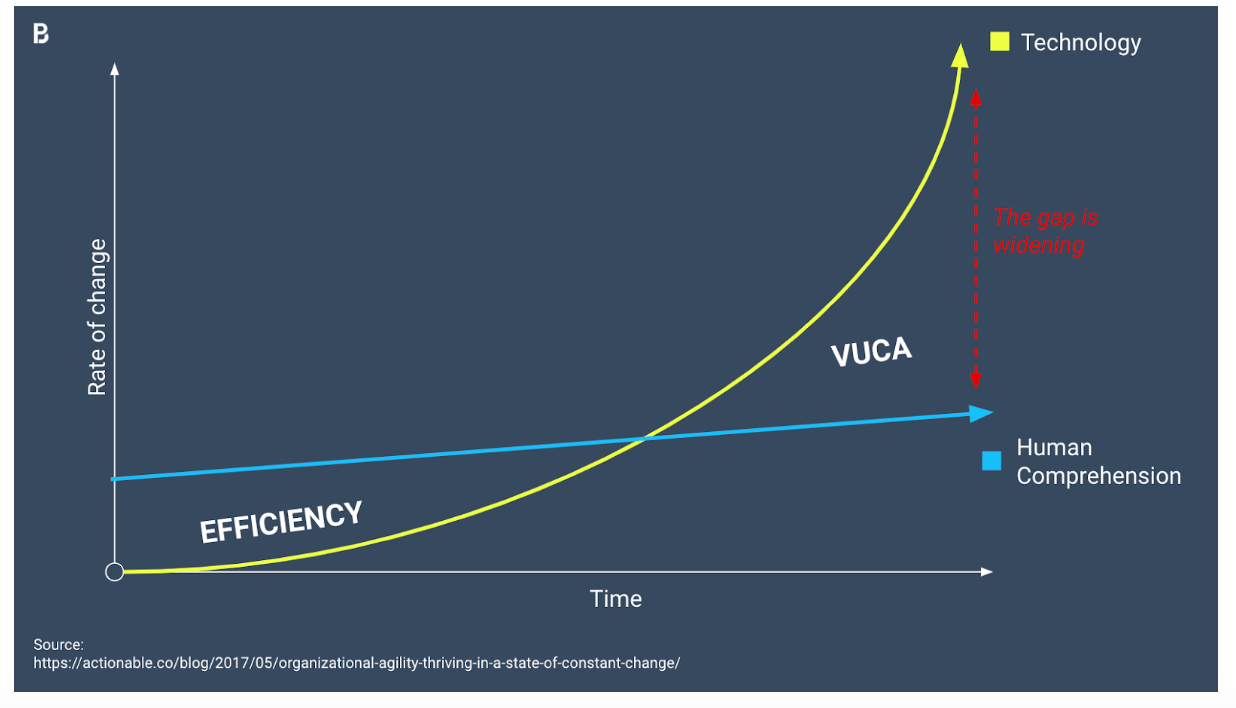
By far the biggest driver behind VUCA is technological development. This is not a bad thing of course, as technology always brings with it new efficiencies, increased productivity, richer experiences and in general improved quality of life [1]. But it also brings by-products with it, such as new cybersecurity risks, more interdependence and systemic risks between different platforms, privacy and mass-surveillance concerns and just a general anxiety of everything changing really fast. The picture 1 shows how the gap between human comprehension and technological development is widening exponentially.
Globalisation
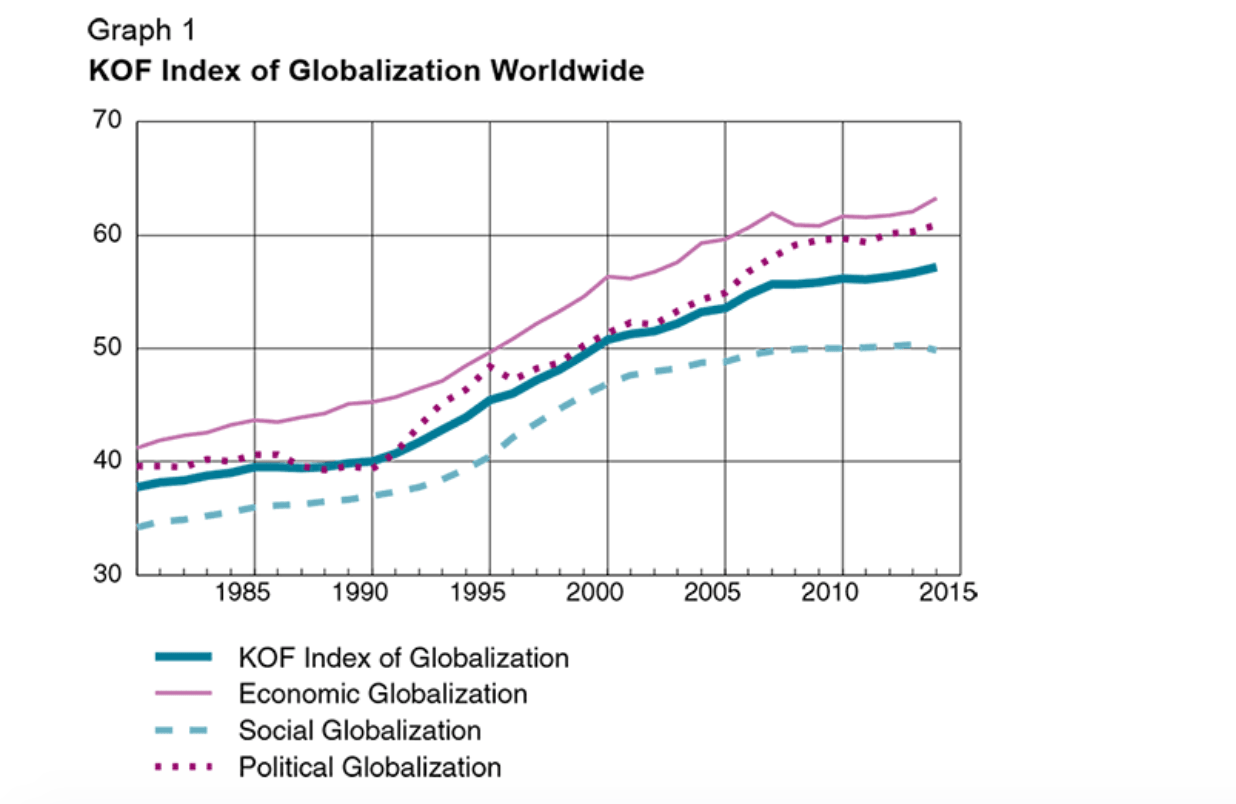
National economies have become more integrated and interconnected. Supply chains are getting ever more complex, making quality management more difficult than ever before. New types of safety risks are evolving as a result of immigration and multilingual workforce. And even though most regulations try to smooth the playing field, they end increasing complexity instead of reducing it. KOF Globalization Index shows clear trend where we are heading globalisation.
Urbanisation
The population is still growing and a big part of it is packing to cities. This will obviously unlock more economic growth and opportunities but also create new risks of social unrest, environmental overload, youth unemployment and inequality. In 2050 the amount of people living in cities will grow from 54% to 66%.
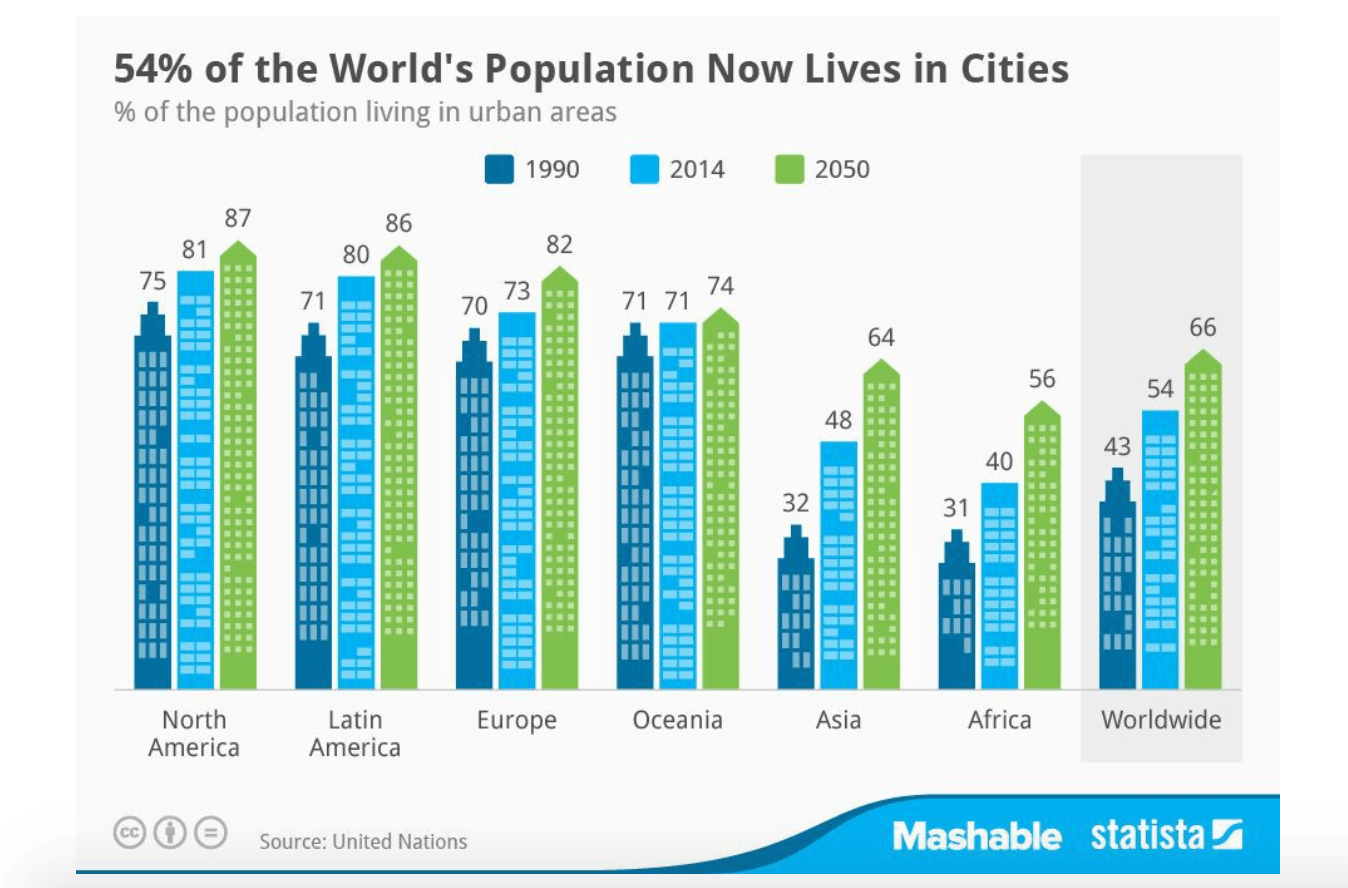
Image source: https://bit.ly/2EleSTH
This blog post is part of our VUCA blog series. For more on this topic, see these blog posts we've written:
- VUCA - The beginning
- VUCA: Failure to Adapt Or Adapt to Failure
- Why is VUCA Here To Stay? - Part II
- What does it mean to learn from mistakes and failures?
- Why learning from failures and mistakes matter in VUCA world?
As you can see, VUCA is here to stay and growing. Now is the time to wake up your team and organisation to this huge change and start adapting to it. If you want an effective way to communicate this with your boss or your team, you can download our FREE white paper about the topic:
{{cta('14c02fd6-729b-46e2-9c81-c8f07bdb356d')}}
We are building the world's first operational involvement platform. Our mission is to make the process of finding, sharing, fixing and learning from issues and observations as easy as thinking about them and as rewarding as being remembered for them.
By doing this, we are making work more meaningful for all parties involved.
More information at falcony.io.
test cta injection
Button Text
Master Retail Security
Download guideUnlock Whistleblowing Excellence
Contact usSupercharge your tenant experience and involvement!
Download guideImprove your facility audit processes with best practices
Download guideUnlock Whistleblowing Excellence
Download guideSet up your incident reporting process like a boss!
Download guideElevate incident reporting
Download guideLearn more about Safety KPIs and their impact.
Learn moreLet us help you become ESG compliant
Get startedGet started today
Get startedImprove security management
Advance your organisation’s security maturity with an easy-to-use digital SEMS platform built for safer, smarter and more resilient operations.



